Clutter remedy Blog

What The Atlantic Missed About OCD: There Is Hope

Dear Editor,

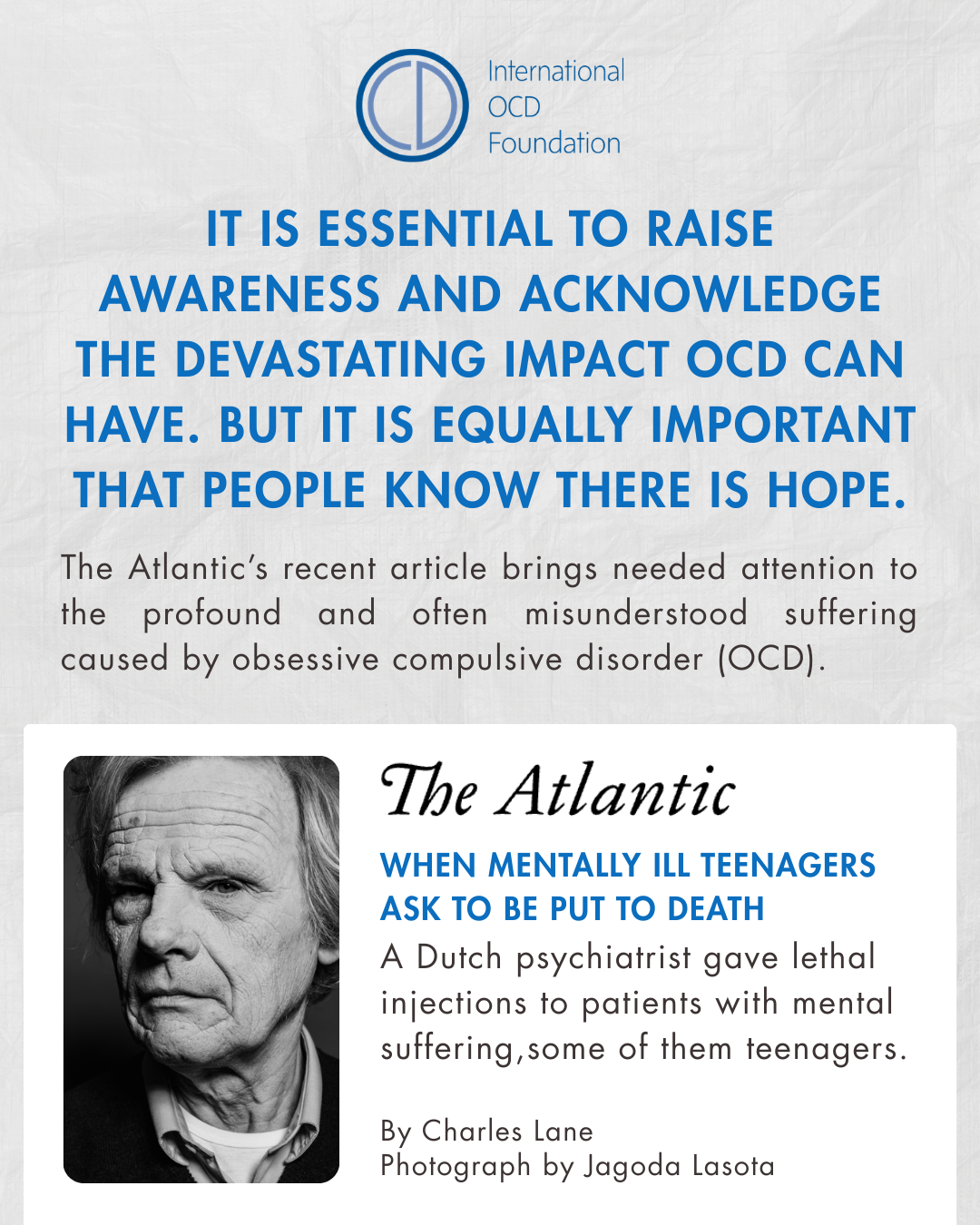
The Atlantic’s recent article, “When Mentally Ill Teenagers Ask to Be Put to Death,” brings needed attention to the profound and often misunderstood suffering caused by obsessive compulsive disorder (OCD). As the story illustrates, OCD can be severe, chronic, and life-threatening — so much so that individuals with OCD are at significantly elevated risk of suicide.
However, what is missing from this important conversation is an equally critical truth: effective, evidence-based treatments for OCD exist. Unfortunately, even after years in care, up to 98% of people never receive the many first, second, and third-line approaches that are available due to systemic breakdowns in proper screening, diagnosis, referral, and access to specialized care.

With appropriate care, many individuals who once felt trapped by their symptoms are able to reclaim their lives, pursue their goals, and thrive. At the International OCD Foundation, we regularly hear from people affected by OCD who have gone from a place of despair to one of hope because they were able to access evidence-based treatment, specifically Exposure and Response Prevention therapy (ERP). 

It is essential to raise awareness and acknowledge the devastating impact OCD can have. But it is equally important that people know there is hope. The tragic outcomes outlined in “When Mentally Ill Teenagers Ask to be Put To Death” are not inevitable. With continued efforts on raising accurate awareness of OCD and strengthening our systems of care around the globe, more people with OCD can access the effective, life-saving treatment they deserve.

For those seeking help, resources and treatment guidance are available at iocdf.org.

The post What The Atlantic Missed About OCD: There Is Hope appeared first on International OCD Foundation.

Share:

Want More?

Sign up for our Newsletter and stay informed on the latest news at The Clutter Remedy

More Posts

Newsfeed

  • Taming Stress in the Body: How Clutter Keeps Us on Alert  
    on May 4, 2026

    Melinda Rathkopf, MD, MBA, and Ashley Sewall, PhD  May is Mental Health Awareness Month, a time to consider how mental well-being is shaped not only by our thoughts, but also by our […]

  • Your Clutter Has a Carbon Footprint 
    on April 20, 2026

    Katie Neary Earth Day and organizing are more connected than people realize. At first glance, Earth Day might bring to mind recycling bins, reusable tote bags, and planting trees. Organizing, on the […]

  • 3 Ways to Buy Less After You’ve Decluttered and Organized 
    on April 6, 2026

    Sarah Metcalf  You tackle your big organizing project, you declutter, you install the systems, you finally get things the way you want them in your home, then three months later you look around at […]

  • When Motivation Is Not Enough…How To “Jumpstart” Your Organization Project 
    on March 16, 2026

    Michelle Zorbas, CPO®, CWC  We can have plenty of good reasons and motivation to get something done, and yet starting still feels impossible. Maybe you know you need to go through boxes in the […]

  • Organizing with Compassion
    on March 2, 2026

    A Soft Reset for Seniors and People with Physical and Emotional Challenges Pat Rose Organizing is often portrayed as a purely practical task—sorting, labeling, and tidying up physical spaces. But […]

Affiliate Updates: Spring 2026

An IOCDF Affiliate carries out the mission of the International OCD Foundation through programs at the local community level within the United States. Each Affiliate

Read More »

© 2026 The Clutter Remedy. All Rights Reserved.

Website Created and Maintained by Limelight Media

×
×

Cart