|
You love your partner, child, mom, your dad, grandparent, your sister, brother, cousins, best friend and neighbor. You love who you love, but you don’t always love their behaviors, their lifestyle and or their space.
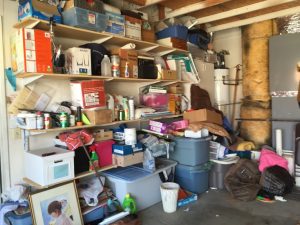
People with hoarding and cluttering over-accumulating and collecting behaviors or extensive collecting (EC) behaviors have difficulty connecting their behavior to unsafe conditions and lack of well being. They believe they are living just fine. When a close family member or friend attempts to help it is rarely successful. People who engage in (EC) may have some insight into their clutter challenges or no insight at all. Studies by the Institute for Challenging Disorganization indicate family members, and close friends, even loving ones, will be a trigger to increase the (EC) behaviors.
Not all people with (EC) behaviors come from homes where over-accumulation and collecting took place. After working with over 1200 clients in the past 5 1/2 years I have many hypothesis about why the behaviors perpetuate.
Here are some of my hypothesis on what causes (EC) based on interviewing over 1200 clients:
- Our language causes perpetual disorganization
- A link to a father / child disruption, damaged or broken relationship
- Feeding schedules during infancy
- A primitive part of the brain that activates collecting behaviors
Mental health challenges such as hoarding disorder, and obsessive compulsive challenges are unusually difficult to treat. They are not illnesses like schizophrenia, bipolar disorder, major depression, post traumatic syndrome or panic disorder. There are no specific therapies or interventions currently to curb the symptoms and no medications that target the part of the brain stimulating the behaviors. I am certainly not down playing the seriousness of any other mental health challenge but (EC) behaviors are so varied, and with so many different collecting patterns and objects collected, that in some cases the symptoms are simply mind boggling.
One of the clients I helped who was a highly functioning professional started to have symptoms she could not understand. She started putting the toilet seat up and down for hours at a time. She told me that she was in her bathroom without food or water for up to 3-4 hours daily. When asked to symbolize the act of putting the toilet seat up and down she made clear it was not a fear of germs as much as an avoidance of walking through her overly-cluttered home and out the door. She had so many wonderful goals and dreams but the (EC) behaviors and the stuff blocked her from reaching them. Her shame about having clutter overwhelmed her. She did not know how to remedy the piles and piles of belongings she had collected over the years. She was a highly functioning person at work but with a growing mound of clutter in her small apartment she couldn’t find her clothes or a place to have a good night’s rest. She told me her denial about the collecting finely lifted when she cut herself on some broken glass while climbing into her mound one night to find a place to sleep. She realized the things she collected symbolized a “new” life. After a divorce from the previous year left her bitter and lonely she started to shop for all “new” stuff. She got rid of everything that reminded her of her ex-husband and wanted a fresh new start. The hole left inside her from the divorce was difficult to fill and so she kept shopping and shopping and shopping until her home was filled to the ceiling. Once she was able to go through and choose a reasonable amount of stuff and sell the rest she was able to resume a lifestyle she enjoyed. She started to date again and stopped having compulsive behaviors, recognizing they did not help her at all.
It can be a very mysterious set of circumstances which trigger over-accumulating and collecting behaviors and the solutions are educational and spiritually based.
Over-accumulation and collecting behaviors are fear based, guilt based and sentimental based. People can start collecting from their mail, grocery items, free newspaper stands, dumpsters or by shopping. Some people collect from relatives that are alive and that have passed. Every case is a unique eye opener.
I helped a man who saved all his egg and milk cartons. There were 1000’s of egg and milk cartons in his home. He created a maze of egg and milk cartons. When asked to symbolize the cartons he explained that they could be “useful” and that he felt “shame” in throwing them away. He exclaimed that they were “perfectly created objects.” The cartons symbolized “prospects” and “inventions” that he could develop from them. When asked “what are some of your ideas for the cartons?” he claimed he was “working on it.” It may not make sense to you or I why he was so bent on creating something out of the cartons, but the important thing was to help him see how they were hurting him. By not focusing on “getting rid” of the cartons and focusing on what he could do with them he found a simple solution. He came to the conclusion that by bringing them to a recycling center he would contribute to society and make some money. After that he continued to donate egg and milk cartons regularly. He also figured out what he truly valued in life, which was to be productive and helpful to others. He found a job at a local health food store and used his knowledge about natural remedies to help people find their way to wellness.
Freud explained over-accumulation with a theory called “object relations,” a personalized view of the object and attachment to the objects based on a person’s relationship to the object. Jung’s ideas are that the objects are symbols of self, life and perceptions. Helping people focus on the symbolic meaning of their collections is extremely helpful in their parting with them. The work involved in helping people stop (EC) behaviors is unique in every situation, but there are key methods, exercises and techniques I have created that help in the long-term.
The behaviors are generally annoying, scary, tedious, sad and exhausting for family members who attempt to intervene. You are not alone. Most people with (EC) behaviors feel isolated, ashamed, angry, frustrated, lost and ineffective about their space and their motivation to do anything about the mess around themselves. The behaviors are not a way to sabotage you, or an act of being passive aggressive. The (EC) behaviors stem from many different reasons that they cannot always control.
Over-accumulation and collecting behaviors have been around since time began. In studying “cave” people behaviors there were some that collected more than others. Mental health practitioners, educators and researchers are now becoming more and more interested in the subject to find cures, interventions and therapies specific to the odd behaviors.
Hoarding disorder is not a term I am fond of. Hoarding is a term for animals. I prefer the term extensive collecting to talk about the subject. It is an International epidemic and there is a help out there for you and your loved one. In each community there are task forces going out to help people that are trapped by their belongings. These forces are not there on a day and night basis or even in an emergency, but with planning and contact they will intervene with your loved one.
Don’t take a family member’s hoarding and cluttering lightly. It is a very serious challenge and can be life threatening. There is always a way to see the light and create a clear path without fighting and harm. Professional Organizers with an expertise in mental health have a lot of techniques and insight to work with situations involving large amounts of clutter.
When someone is living in a pile of trash and stuff so high that they cannot safely move around without falling, or when a fire department refuses to enter a space with too much stuff it is time to intervene. Don’t wait until a tragedy occurs.
Most of the time the task force in your area will consist of a fireman, adult protective worker, city worker, social worker, a professional organizer and volunteers. These groups of people do make house calls. They help people break down the barricades that hold them back from enjoying their ideal lifestyle. I call the barricade of stuff “a self made prison system with a forever pass to go free.”
Marla Stone is a mental health consultant and speaker specializing in extensive collecting challenges. You can reach her by email at findorganizer@gmail.com or call now for a free 30 minute phone consultation at 949-709-7000.